Finalrentals Blog

Published in Explore Category.
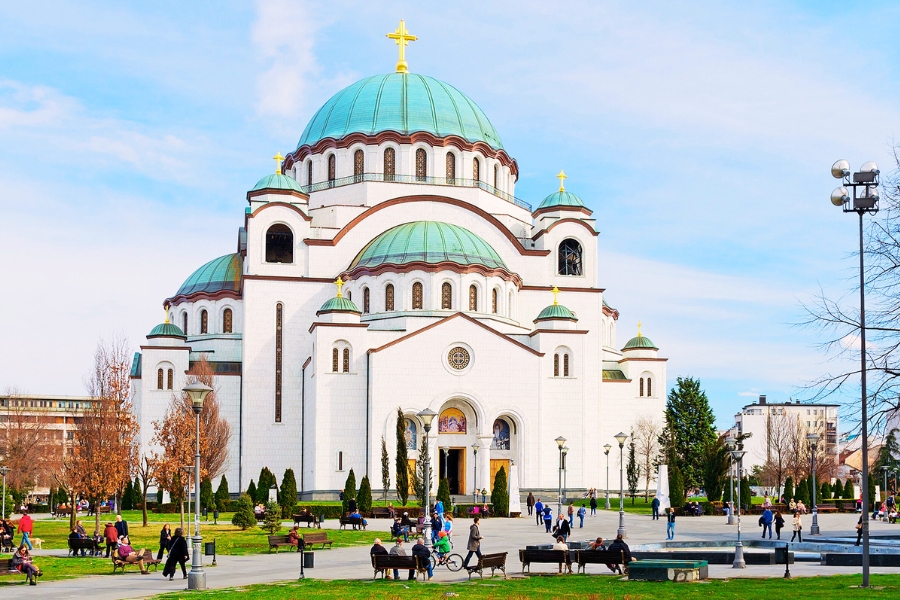
The Church of Saint Sava, also called St. Sava Temple, is Belgrade’s most iconic landmark. If you’re wondering what to see around St. Sava Temple, the surrounding Vračar neighbourhood is rich with history, culture, green spaces, and landmarks that showcase Serbia’s heritage.
In this guide, we’ll highlight the attractions near St. Sava Temple. You can stroll between these sites and discover a blend of spirituality, national history, and modern city life. However, if you plan to explore other parts of Belgrade or take day trips beyond the city center, renting a car can be a great choice, especially if you’re short on time.
Exploring St. Sava Temple in Detail
St. Sava Temple is a colossal Serbian Orthodox church with deep historical roots and stunning design. It’s the largest Orthodox church in Serbia, built on the site where the Ottomans burned Saint Sava’s relics in 1595. Let’s break down its history, architecture, and what you will see inside, including a mosaic-filled interior and an underground crypt.
History and Spiritual Significance of St. Sava Temple
The Temple of St. Sava is dedicated to Saint Sava, the first Serbian Archbishop and patron saint of Serbia. He played a key role in founding the Serbian Orthodox Church and remains a central spiritual figure. The church stands on the Vračar Plateau. Building a church here transformed a place of loss into one of pride. Plans began in the 19th century, but construction started in 1935 and was delayed by war and politics. Completed externally in 2004, the temple symbolises Serbian faith, resilience, and cultural identity.
Architecture and Design Highlights
From the outside, the Temple of St. Sava stands out for its monumental scale and traditional Neo-Byzantine architecture, inspired by Hagia Sophia in Istanbul. The vast central dome rises about 79 metres and is topped with a gilded Orthodox cross that catches the light. The exterior is finished in white marble and granite.
Green copper domes with a natural patina crown the structure, surrounded by smaller domes and 4 bell towers that create a silhouette. The temple dominates the Vračar skyline and is visible from many parts of the city. Although completed in modern times, its classical design gives it a timeless presence. Walking around the building reveals ornate entrances, carved details, and massive bronze doors, all of which highlight its impressive scale.
What to Look For Inside the Temple
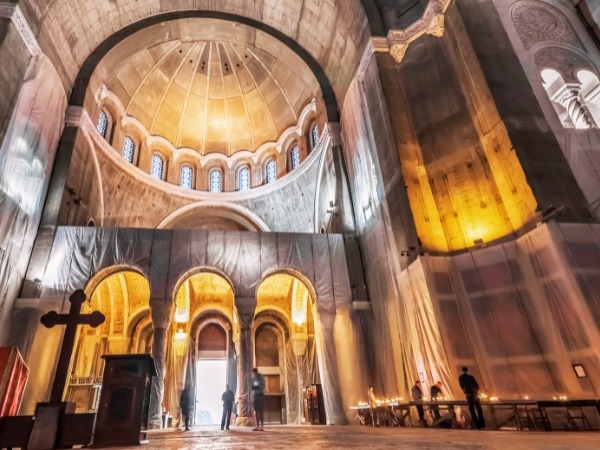
Stepping inside the Temple of St. Sava reveals a vast and luminous interior that feels both solemn and awe-inspiring. The most striking feature is the central dome, where a monumental mosaic of Christ Pantocrator looks down from a gold-covered ceiling. The church contains one of the largest mosaic collections in the world, covering about 12,000 square metres across walls and vaults. These mosaics depict biblical scenes, saints, and ornamental patterns in the Orthodox tradition.
As you move through the nave, notice the iconostasis, crafted from white marble and designed to separate the altar area. A massive circular bronze chandelier, around 20 metres across, hangs beneath the dome. The atmosphere is calm and reverent, marked by candlelight, soft lamps, and quiet prayer. Photography is usually allowed without flash. After your visit, this area also connects easily to cafés, parks, and museums, making it one of the best things to do near St. Sava Temple.
The Crypt of St. Sava Temple
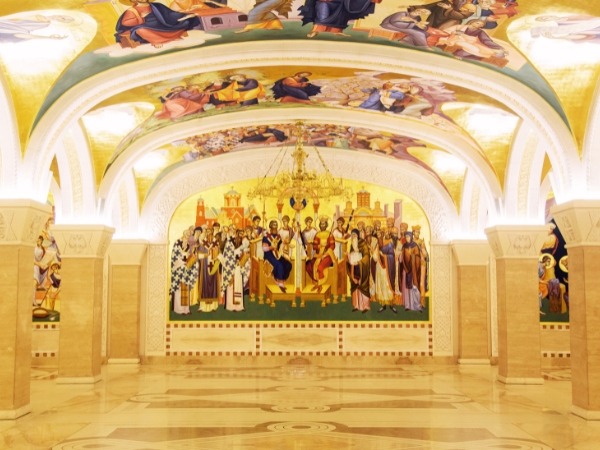
One of the most striking parts of the Temple of St. Sava is located below ground in the Crypt of Saint Sava. Accessible by stairs or lift, the crypt feels nothing like a dark underground space. Instead, it opens into a bright, richly decorated chapel that many visitors consider the highlight of the entire complex.
The walls and ceilings are covered in elaborate gold mosaics, even more ornate than those in the main church. These mosaics depict scenes from Orthodox Christian history and revered Serbian saints, created from tens of thousands of colourful glass pieces, including Murano glass from Italy.
Strategic lighting causes the gold surfaces to glow, filling the space with warmth and reflection. White columns, detailed chandeliers, and generous proportions give the crypt a refined, almost palace-like atmosphere.
Within the crypt, you will also find the tomb of Saint Lazar, a medieval Serbian ruler and martyr, along with important church relics and memorials to senior religious figures. Despite being underground, the space feels open and calm, with benches along the sides inviting visitors to sit quietly and take in the surroundings. The crypt is usually less crowded than the main floor. Before leaving, be sure to look up at the mosaic ceiling, as its detail and craftsmanship are truly exceptional.
5 Attractions near St. Sava Temple
Located in the heart of Belgrade, the Temple of Saint Sava is surrounded by cultural landmarks, green spaces, and museums, all easily accessible on foot. Whether you are interested in history, architecture, or everyday city life, this area offers plenty to see. If you want flexibility beyond the city centre, renting a car in Belgrade makes it easy to combine nearby attractions with trips further afield.
1. Nikola Tesla Museum (Short Walk from St. Sava Temple)
Just a short walk from the Temple of St Sava stands one of Belgrade’s most popular museums, the Nikola Tesla Museum. Dedicated to the life and work of Nikola Tesla, the inventor of alternating current, the museum offers a lively contrast to religious sightseeing. Set inside a historic villa, it combines science, history, and hands-on demonstrations.
The museum is housed in a 1920s residence in Vračar. Although modest in size, it preserves an extraordinary collection, including more than 160,000 original documents, drawings, and photographs, as well as personal belongings and working models of Tesla’s inventions. One of the most moving exhibits is Tesla’s urn, displayed as a golden sphere, marking the museum as his final resting place.
Visits are organised around guided tours that begin every hour and are usually available in English. The experience starts with a short film about Tesla’s life, followed by live demonstrations of his work. Visitors often see a Tesla coil producing arcs of electricity and wireless energy experiments where lamps glow without cables. Guides frequently invite participation, making the science accessible and memorable.
Exhibits also cover Tesla’s induction motor, early radio experiments, and remote control technology, alongside letters, patents, clothing, and personal items that reveal his character. Tesla was born in 1856, held more than 300 patents worldwide, and imagined wireless communication long before it became a reality. Allow about 1 to 1.5 hours for the visit. The museum is 5 to 10 minutes on foot from the temple.
2. Vračar Plateau and Karađorđe’s Park
Surrounding the Temple of St. Sava is the wide open Vračar Plateau. Sitting on a natural rise in the city, the plateau offers open views of the temple. It is closely linked to Serbian history, as tradition holds that Saint Sava’s relics were burned here in the late 16th century.
The plateau is anchored by several landmarks. Beside the church stands the National Library of Serbia, while much of the surrounding green space forms Karađorđe’s Park. Named after Karađorđe Petrović, leader of the First Serbian Uprising, the park includes a prominent bronze statue of him holding a sword, positioned between the temple and the library. The statue symbolises the connection between national struggle, culture, and faith.
Karađorđe’s Park itself is rich in layered history. During the 1806 siege of Belgrade, it served as a military camp and burial ground for fallen Serbian fighters. Today, the Monument to the Liberators of Belgrade 1806 and preserved tombstones quietly mark this past. Over time, the area was landscaped into a leafy city park, with paths shaded by chestnut and linden trees.
3. National Library of Serbia
Right beside the Temple of St. Sava is another pillar of Serbian culture, the National Library of Serbia. While less visually dominant than the church, it holds millions of books, manuscripts, and historical documents.
Founded in 1832, the National Library is Serbia’s oldest cultural institution and its largest library. Its location on the Vračar Plateau is symbolic, placing knowledge and faith side by side. The current building opened in 1973, after the original library was destroyed during World War Two, when bombing led to the loss of vast collections and medieval manuscripts. The modern structure reflects its era, with clean lines, concrete, and glass, and is often said to resemble an open book.
The library houses around 5 to 6 million volumes, including rare books and surviving medieval texts. It is open to the public on weekdays, and visitors can usually enter the lobby freely. Temporary exhibitions are often displayed near the entrance, with information available in Serbian and English. Inside, you may notice busts of notable writers and artworks celebrating national literature.
Outside, a sculpture of The Scribe symbolises literacy and heritage, while the plaza offers clear views of the temple dome. Even a brief visit or a walk past highlights how the library and the church together form the cultural heart of Belgrade.
4. Slavija Square
Just downhill from the Temple of St. Sava, about a 5 to 10-minute walk north, lies Slavija Square, one of Belgrade’s busiest and most recognisable urban spaces. Slavija is not calm or historic in the traditional sense. It is a large circular intersection where multiple major roads meet, creating constant movement and noise. With its central fountain and heavy traffic, it offers a clear look at everyday city life.
Slavija Square functions as a major transport hub, with cars, buses, and trams flowing continuously around the circle. There is a large musical fountain at the centre. In the evening, the fountain lights up with coloured LEDs and synchronised water displays, sometimes set to music. Locals and visitors gather on the pavements to watch, especially on warm summer nights.
During the day, the square highlights Belgrade’s modern character. Surrounding buildings range from older socialist era structures to new hotels and office towers. Notable landmarks include a long-standing budget hotel and the nearby National Bank of Serbia. A statue of Dimitrije Tucović, a Serbian socialist figure, also stands close to the square.
5. Tašmajdan Park and St. Mark’s Church
A little further from the Temple of St.Sava, around 15 to 20 minutes on foot or a short ride away, you will find Tašmajdan Park and the Church of St. Mark, an area that blends green space, history, and architecture. Visiting here complements St Sava perfectly, offering a calmer setting and insight into a different chapter of Belgrade’s religious and urban development.
Tašmajdan Park is one of Belgrade’s most popular parks and a favourite gathering place for locals. Its name comes from the Turkish words for stone quarry, as this area once supplied building stone for the city.
Today, the park is a spacious, leafy retreat with walking paths, lawns, monuments, playgrounds, cafés, and sports facilities. Residents come here to jog, relax, walk dogs, or meet friends, especially in the evenings and on weekends. Despite its central location, the atmosphere is relaxed and communal, making it an ideal place to slow down after sightseeing.
Rising above the park is the impressive Church of St Mark, built in the 1930s in the Serbo-Byzantine design and inspired by the medieval Gračanica Monastery. Its five domes and striped brick façade give it a distinctive appearance. Inside, the church feels darker and more traditional than St. Sava.
One of its most important features is the marble tomb of Emperor Dušan, a 14th-century Serbian ruler whose empire once stretched across much of the Balkans. The church remains active, and visitors may encounter services or choir rehearsals. Next to St Mark’s is a small Russian Church of the Holy Trinity, built by Russian émigrés in the 1920s, adding another layer of history to the area.
Takeaway
Exploring the area around St. Sava Temple in Belgrade reveals a myriad of sights and experiences. In just a short walk, you’ve encountered an awe-inspiring cathedral, delved into the genius of Nikola Tesla, wandered through historic parks, and seen everyday city life unfold in squares and libraries.
Explore the St. Sava Temple and its surroundings by renting a car with Final Rentals. With Final Rentals, booking a car online is fast and simple. Select Belgrade Nikola Tesla Airport as your pickup location, enter your travel dates, and choose a vehicle for your trip. Book and manage your car rental at any time. Download the Final Rentals app on Google Play and the App Store.