Belgrade is a city rich in history and culture, and exploring its museums is one of the best ways to connect with Serbia’s heritage. You’ll discover stories of powerful empires and everyday life that shaped modern Serbia as you walk through the city. Many museums are spread across different parts of the city, so it's best to rent a car, especially if you’re short on time. Keep reading to step inside Belgrade’s past and see the city through its most fascinating collections.
Belgrade museums offer a wide range of experiences for travellers interested in history, art, and culture. Here’s a list of world-class national institutions and smaller specialized collections you shouldn’t miss.
Address: Trg Republike 1a, Belgrade (Republic Square)
Opening Hours: Tue, Wed, Fri & Sun 10:00 AM–6:00 PM; Thu & Sat 12:00 PM–8:00 PM; closed Mondays
The National Museum is the largest and oldest museum in Serbia, founded in 1844 and housed in a grand 1903 building on Belgrade’s central Republic Square. Its collection includes over 400,000 artifacts spanning prehistoric times through the 20th century. Inside, you’ll explore everything from ancient Roman and medieval treasures to a vast numismatic collection and European paintings by well-known artists.
One of the museum’s most prized exhibits is Miroslav’s Gospel, a stunning 12th-century Cyrillic manuscript recognized as a UNESCO-protected treasure. Exhibits are arranged chronologically, allowing you to walk through Serbian history step by step—seeing prehistoric tools, medieval church art, Ottoman-era objects, and masterpieces of modern Serbian painting.
All galleries include descriptions in English and Serbian. Admission is around 300 RSD, and entry is free on Sundays. The museum also oversees two satellite institutions, the Museum of Vuk and Dositej and the Gallery of Frescoes, which you can visit with a combined ticket.
Address: Kralja Milana 21, Belgrade
Opening Hours: Fri 10:00 AM–6:00 PM; Sat 10:00 AM–5:00 PM; Sun 10:00 AM–2:00 PM; closed Mon–Thu
The Museum of Paja Jovanović is a memorial museum dedicated to one of Serbia’s greatest painters, Paja Jovanović. Set inside a high-ceilinged apartment in central Belgrade, this space feels like stepping directly into the artist’s world. The interior recreates Jovanović’s Vienna art studio, complete with pieces of his original furniture, painting tools, easel, palette knives, and other personal belongings.
Around the rooms hang 211 of his artworks, including detailed landscapes from his travels, dramatic historical compositions, lifelike portraits, and even mythological scenes. The collection was formed in 1970 when his widow donated his inheritance to Belgrade’s City Museum.
As you walk through the apartment, you can follow the evolution of Jovanović’s style: early landscapes in one salon, grand history paintings in another, and a portrait gallery featuring society figures of his era. Standing face-to-face with his famous portraits in a room designed to mirror his original studio is a remarkable experience.
As this is a small specialty museum, please note its limited hours, which are only Friday through Sunday. Visitors often get an impromptu curator-led tour with stories behind the paintings. With an entrance fee of around 200 RSD, this museum is a must-see for art lovers seeking a deeper connection to Serbia’s fine art heritage.
Address: Ušće 10, Blok 15, New Belgrade
Opening Hours: Mon, Wed, Fri, Sun 11:00 AM–7:00 PM; Thu & Sat 12:00 PM–8:00 PM; closed Tuesdays
Belgrade’s Museum of Contemporary Art (MoCAB) is the city’s premier institution for 20th-century and contemporary art. It is celebrated not only for its collection but also for its striking modernist architecture near the Sava–Danube confluence. Opened in 1958, the museum occupies a geometric structure of glass and white marble, designed by architects Ivan Antić and Ivanka Raspopović. The building resembles a faceted crystal and is set in a green park in New Belgrade, making it a standout work of art in its own right.
The museum’s spacious galleries present a journey through Yugoslav and Serbian modern art. You’ll move chronologically through key themes: early 20th-century Impressionist works, interwar avant-garde movements, and extensive sections dedicated to post-1945 abstraction, social realism, conceptual art, and more. The museum also features a sculpture collection covering works from the early 1900s to the 1970s, displayed in dedicated halls.
Don’t miss the outdoor sculpture park surrounding the building or the museum’s Salon in the city center, which hosts contemporary exhibitions. After a major renovation, MoCAB reopened in 2017 with fully modern, visitor-friendly facilities. Labels throughout the museum are in English and Serbian, and there are rotating exhibitions.
Plan to spend 1 to 2 hours exploring. The museum is closed on Tuesdays, with extended evening hours on Thursdays and Saturdays. Tickets cost around 600 RSD, with free admission for certain visitor categories on select days. When you’re done, unwind at the riverside café and reflect on how the museum captures the artistic evolution and complex history of Serbia and the former Yugoslavia.
Address: Trg Nikole Pašića 11, Belgrade (Nikola Pašić Square)
Opening Hours: Tue–Sun 12:00 PM–8:00 PM; closed Mondays
The Historical Museum of Serbia (Istorijski muzej Srbije) offers a rich and insightful journey through the story of the Serbian people. Located right in the heart of Belgrade on Nikola Pašić Square, the museum occupies an impressive 1930s neo-Classical palace, originally built as the Agrarian Bank. With its marble façade and grand columns, the building sets the tone for a museum dedicated to national heritage.
Inside, the museum’s mission is to collect, preserve, and present artifacts spanning centuries of Serbian history. Although there is currently no permanent chronological exhibition, the museum hosts temporary thematic exhibitions that change several times a year. These exhibitions encompass a diverse range of eras and subjects, including medieval Serbia, the Ottoman period, World War I and World War II, socialist Yugoslavia, and cultural or artistic milestones.
Depending on the exhibition, you may encounter medieval royal charters, ancient weapons, folk costumes, religious artifacts, documents from the 19th and 20th centuries, or personal belongings of significant Serbian figures. One show focuses on the Serbian Revolution, featuring uniforms and insurgent flags, while another explores everyday life in Yugoslavia with nostalgic household items from the 1970s.
The museum also oversees the Residence of Prince Miloš in Topčider, a beautifully preserved 1830s mansion used for additional exhibits. Guided tours in English are often available on weekends or by request. Tickets are around 400 RSD. With its central location and thoughtful exhibitions, the Historical Museum of Serbia is one of the must-visit Belgrade museums for anyone interested in the nation’s history.
Address: Mihaila Mike Jankovića 6, Belgrade (Dedinje district)
Opening Hours: Tue–Sun 10:00 AM–6:00 PM; closed Mondays
If you’re curious about the Yugoslav era, the Museum of Yugoslavia is one of the most immersive places to explore 20th-century Balkan history. It is located in the leafy, upscale neighbourhood of Dedinje, about 4 kilometres from central Belgrade. The museum is situated within a tranquil, park-like complex that honors the cultural and political legacy of Yugoslavia, with a special focus on Josip Broz Tito and the era of the Non-Aligned Movement.
The museum was created by merging Tito’s Memorial Centre with the former Museum of the Revolution, resulting in a massive collection of over 200,000 artifacts that collectively tell the story of the Yugoslav people. Begin at the “25 May” Museum, a striking modernist building from 1962 that often features rotating exhibitions on Yugoslav culture, art, and social life.
A short walk through landscaped gardens leads you to the House of Flowers and Tito’s mausoleum. Inside, you’ll find Tito’s white marble tomb, surrounded by floral tributes and exhibits about his life, travels, and political influence.
The Old Museum building contains a collection of Tito’s personal items and diplomatic gifts, showcasing Yugoslavia’s global ties. Among the displays you may see are ornate ceremonial swords, artworks, batons from the national Youth Relay, African masks, or space-related memorabilia gifted during state visits. This is a reminder of Yugoslavia’s unique international position during the Cold War.
Outdoors, the museum grounds serve as a sculpture park, featuring works by renowned Yugoslav artists. All exhibits include English translations, and the museum offers free guided tours in English on weekends.
Address: Gospodar Jevremova 21, Belgrade (Dorćol old town)
Opening Hours: Tue, Wed, Fri & Sun 10:00 AM–6:00 PM; Thu & Sat 12:00 PM–8:00 PM; closed Mondays
Vuk & Dositej Museum is a hidden gem for lovers of literature, linguistics, and Serbian cultural history. Dedicated to two giants, Vuk Karadžić and Dositej Obradović, the museum is fittingly set inside one of the oldest school buildings in Belgrade’s Dorćol quarter. The 18th-century Ottoman-style house once housed Serbia’s first Great School, which was opened in 1808 by Dositej himself. Walking across the creaky wooden floors, you step back into a formative era when Serbia’s modern language and education system were being shaped.
On the ground floor, exhibits are devoted to Dositej Obradović, an Enlightenment philosopher, educator, and the first Serbian minister of education. You’ll find his books, manuscripts, letters, and original furniture. Upstairs, the museum turns to Vuk Stefanović Karadžić, the 19th-century linguist who standardised the Serbian language and alphabet.
After his death, many of his personal belongings were preserved for posterity, and here you can see his writing desk, spectacles, black coat, walking stick, and handwritten notebooks. These artefacts paint a vivid portrait of the man behind the famous motto, “Write as you speak.”
Exhibits are labeled in both Serbian and English, with quotations from the two cultural icons. The museum is small and can be visited in about 30 minutes. The National Museum manages it, so it follows similar ticketing and opening hours.
Address: Krunska 51, Belgrade (Vračar district)
Opening Hours: Mon 10:00 AM–6:00 PM; Tue–Sun 10:00 AM–8:00 PM (guided tours start each hour); open daily
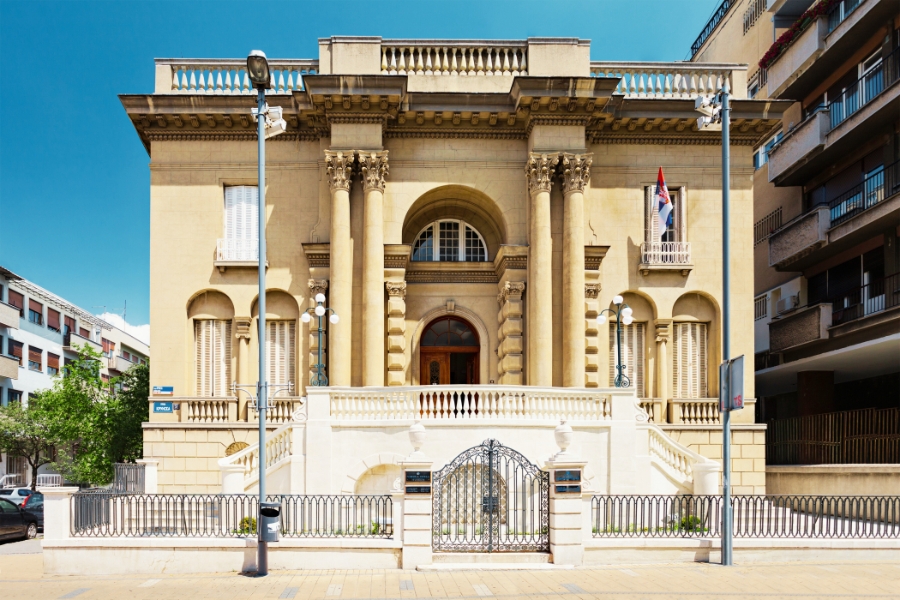
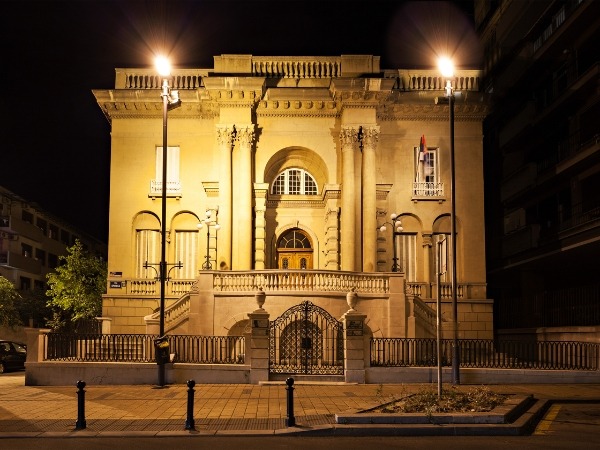
The Nikola Tesla Museum is one of Belgrade’s most popular attractions. As the only museum in the world dedicated entirely to Nikola Tesla, it offers interactive science, history, and hands-on demonstrations. It is situated within a 1927 villa in the Vračar neighbourhood. When you enter, you step into what was once a grand residential salon, now transformed into a space dedicated to one of humanity’s greatest inventors.
The permanent exhibition displays Tesla’s original letters, laboratory notes, invention sketches, personal belongings, and numerous photographs documenting his extraordinary life. One room contains his ash urn, as Tesla’s remains were brought to Belgrade.
What truly sets this museum apart are the interactive demonstrations. During guided shows, museum staff operate working replicas of Tesla’s inventions. Visitors can witness a Tesla coil shooting high-voltage electricity through the air, lighting bulbs wirelessly, vividly illustrating Tesla’s breakthroughs in alternating current and wireless energy. You may also see his early remote-controlled boat, one of the first RC devices in history.
It is one of the best cultural museums in Belgrade, where science, national heritage, and innovation blend seamlessly. Arrive a little early to secure a spot on the guided tour, especially on weekends. Tickets are reasonably priced and include the demonstrations.
Belgrade museums offer something for every interest, from art and history to science and culture. Remember to check opening hours, as many museums close one day a week, and look out for free-entry days or guided tours to make the most of your visit. With a bit of planning, you can comfortably explore these cultural highlights and gain a deeper understanding of Serbian and Yugoslav heritage.
Rent a car in Belgrade with Final Rentals and pick up your vehicle at Belgrade Nikola Tesla Airport. With a wide range of vehicles and instant booking confirmation, getting around Serbia is simple and stress-free. For extra convenience, download the Final Rentals app on Google Play and the App Store.