Belgrade is a budget-friendly gem in Europe. It is packed with free attractions that make it easy to explore without spending much. You’ll find that many of Belgrade’s highlights, from ancient fortresses to vibrant streets, have free entry or cost only a few coins. While much of Belgrade is walkable and well-connected, renting a car can make it easier to reach viewpoints, parks, and nearby sights at your own pace. This guide will walk you through the free attractions in Belgrade.
Some of its best moments come from simply knowing where to go and how to get there without overthinking your budget. If you’re wondering what to do in Belgrade for free, these experiences show how to enjoy the city’s history, views, and local energy without spending much.
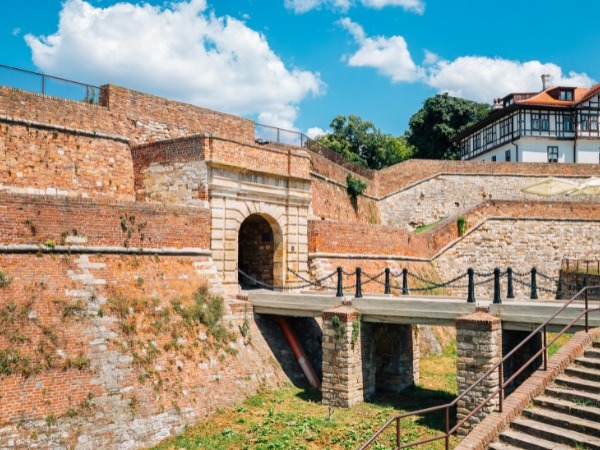
Kalemegdan Fortress is the crown jewel of Belgrade’s free attractions and a highlight of Belgrade sightseeing. Its thick stone walls have witnessed countless battles and empires, and walking along the ramparts rewards you with sweeping views across Belgrade and its rivers. The fortress overlooks the confluence of the Sava and Danube rivers.
A walk through Kalemegdan reveals far more than defensive walls. The grounds function as an open-air museum of Serbian history, featuring medieval gates, Ottoman-era towers, and visible remnants of past conflicts.
The Military Museum is a notable stop, as its outdoor collection of tanks, cannons, and artillery can be viewed for free even though the indoor galleries charge a fee. Informative plaques throughout the site explain the roles played by Celts, Romans, Byzantines, Ottomans, and Austro-Hungarians who once fought over this elevated ground.
The Victor Monument, known in Serbian as Pobednik, is an iconic statue set on a cliff within Kalemegdan Fortress. Climbing up to it is a must for any visitor. Follow the park paths uphill to reach this figure standing atop a tall column. The bronze statue depicts a proud male figure holding a falcon and a sword, representing peace and victory. Built in 1928, it commemorates Serbia’s triumphs in the Balkan Wars and World War I.
From the base of the monument, the views explain why this spot is so popular. You can see sweeping panoramas of the city and rivers in every direction, including the meeting point of the Sava and Danube. New Belgrade stretches out on one side, while the red roofs of the Old Town lie on the other.
Just a short walk from the city centre, Saint Mark’s Church is a Serbian Orthodox church open to visitors free of charge. Completed in 1940, it stands in Tašmajdan Park and is one of the largest churches in Serbia.
From the outside, its distinctive architecture immediately stands out, with multicoloured brickwork patterns, five large domes, and an ornate façade inspired by a medieval monastery. The design reflects Serbian Byzantine traditions through towering arches and detailed craftsmanship. Inside, visitors step into a spacious, softly lit interior, where modest dress is expected, as it remains an active place of worship. The walls and iconostasis are decorated with beautiful religious icons and mosaics.
The church houses the tomb of Emperor Dušan the Mighty, a 14th-century Serbian ruler. As you move quietly through the church, you may notice his sarcophagus among the candles and icons. Depending on the timing of your visit, you might hear gentle choral music or notice the lingering scent of incense. Photography is usually permitted as long as flash is not used.
After exploring the church, it is worth spending time in Tašmajdan Park just outside. The green space surrounding Saint Mark’s is ideal for a relaxed walk, with locals sitting on benches under the trees and families and students enjoying the open areas. Nearby, you can also see a small Russian church.
For a truly local experience, head to Branko’s Bridge in the early evening and watch the sun set over Belgrade. Brankov Most connects the Old City with New Belgrade across the Sava River. The bridge has pedestrian walkways, so you can safely stroll across and pause at the midpoint. As the sun starts to dip, you’ll see the sky changing colours behind the Old Town and Kalemegdan Fortress on one side, and the modern high-rises of New Belgrade on the other.
Watching the city shift from day to night here is magical. In daylight, you’ll spot church spires, the riverside splavovi (floating barge restaurants), and boats cruising along the Sava. As dusk falls, the lights of Belgrade begin to twinkle. Streetlights, building lights, and the illuminated fortress and bridges create a beautiful panorama. Branko’s Bridge isn’t crowded with tourists. Instead, you’ll find commuters and couples passing by.
The sunset from Branko’s Bridge is beautiful on clear evenings when the sky turns pink and orange over the water. In summer, the city sometimes even lights up the bridge with colourful lights at night. If you time it right, you can watch the daylight fade and then see the city come alive with nightlife.
If you’re into urban culture and art, don’t miss wandering around the Cetinjska district. Tucked behind the Skadarlija street, Cetinjska 15 used to be an old brewery complex. Today, it has transformed into a series of creative courtyards filled with street art, quirky bars, and independent galleries. Exploring this area is like discovering Belgrade’s hip side.
By day, you can stroll through the courtyards and alleyways and admire the street art and murals. Local and international graffiti artists have left their mark here, so each corner is visually interesting. You’ll also see some independent art spaces and studios; sometimes they host free exhibitions or workshops.
By night, Cetinjska is one of the city’s nightlife hotspots, with numerous alternative bars and live music venues tucked into the repurposed industrial buildings. Even if you’re not going for the nightlife, an evening walk through the lit-up courtyards can be fun.
To see a completely different side of the city, take a trip across the river and explore New Belgrade. This modern district was built after World War II and is known for its bold Brutalist architecture and socialist era planning. Walking along its wide boulevards and past vast residential complexes feels like stepping into a 20th-century urban experiment.
As you wander, you will encounter enormous concrete apartment buildings known locally as blocks, arranged in a grid and broken up by parks and green spaces. These structures were designed during Yugoslavia’s socialist period, which explains their similar appearance and practical design focused on equality in housing.
One of the most striking landmarks is the Western City Gate, also known as the Genex Tower, a dramatic twin-tower structure connected high above the ground. New Belgrade was planned with openness in mind, so walking here feels surprisingly relaxed. Broad pavements, pedestrian areas, and small parks appear between the buildings. Along the way, you will also pass major landmarks such as the Palace of Serbia and the Museum of Contemporary Art.
Belgrade has a lively art scene, and one of the easiest ways to experience it for free is by attending a gallery opening. The city is full of contemporary galleries, cultural centres, and exhibition spaces, many of which host opening-night events open to everyone at no cost. These evenings are a great way to see local artwork, meet new people, and often enjoy a complimentary glass of wine that galleries traditionally serve at these events.
To find out what is on, check local cultural listings, browse social media event pages, or ask directly at well-known art hubs such as the Cultural Centre of Belgrade and Dom Omladine (the Youth Centre).
New exhibitions are usually launched with evening events, most often on Thursdays or Fridays. You can walk in, pick up an exhibition leaflet, and explore paintings, photography, or installations by Serbian and international artists. Independent spaces such as Galerija Stab, KC Grad, U10 Art Space, and Novembar Gallery regularly showcase contemporary art and usually do not charge an entrance fee.
Belgrade is well known for its music and nightlife, but you do not need a ticket or a club entry to enjoy it. Live music is often part of public life, and you can hear performances for free in many parts of the city. Throughout the year, especially in summer, squares and parks fill with outdoor performances ranging from organised concerts and cultural festivals to spontaneous street musicians.
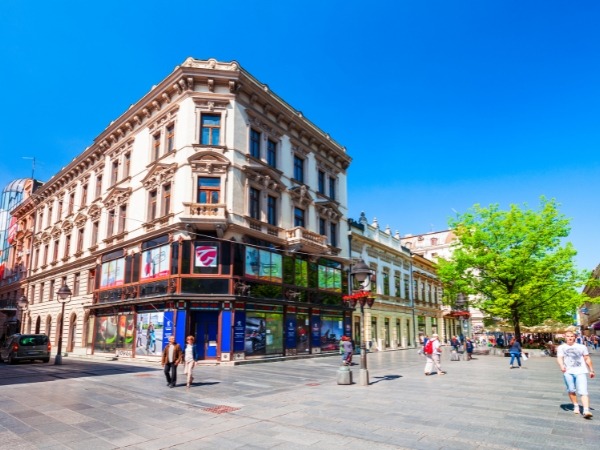
During the warmer months, places such as Republic Square and Nikola Pašić Square often host open-air performances organised by the city or cultural institutions. You might come across an orchestra, a traditional folk dance group, or a local band playing rock or jazz. Belgrade also hosts seasonal events and public celebrations with free concerts, including large festivals that attract well-known regional artists.
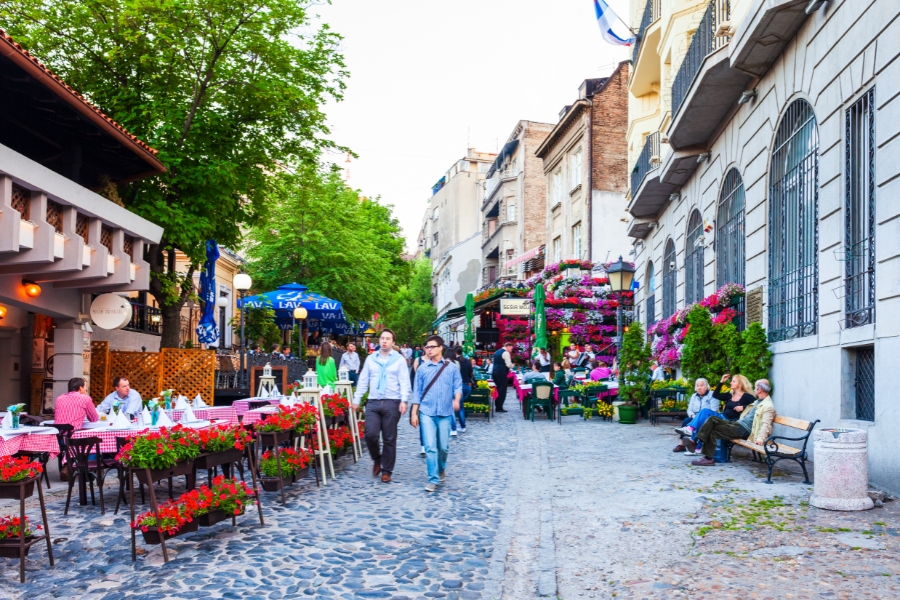
A walk along Knez Mihailova, the main pedestrian street, usually leads to encounters with talented buskers, such as violinists, guitarists, and accordion players performing Balkan folk tunes. In Skadarlija, the historic bohemian quarter, traditional music drifts out of restaurants in the evening, allowing you to enjoy it simply by walking down the street.
For a more reflective outing, visit the Eternal Flame Memorial in Friendship Park in New Belgrade. This monument offers a quiet place to learn about a moving chapter in Serbia’s recent history. The memorial takes the form of a tall stone obelisk with an inscription, dedicated to the military and civilian victims of the 1999 NATO bombing of Yugoslavia.
It was originally designed with a flame burning at the top as a symbol of remembrance, which is how it earned its name. Although the flame was extinguished in the early 2000s, the site remains a powerful place for reflection.
The memorial is free to visit and stands in a public park near the Ušće area, close to where the Sava and Danube rivers meet on the New Belgrade side. Friendship Park itself is a calm green space lined with tall trees, many of which were planted by foreign dignitaries as symbols of international friendship with Yugoslavia.
The memorial is located about 300 metres from the riverbank. When you reach it, take time to read the inscription at the base. While the text is in Serbian, its message clearly honours those who lost their lives and reflects themes of sacrifice, defence, and remembrance.
Sightseeing in Belgrade on a budget is not only possible, but it’s downright enjoyable. The city’s history, culture, and modern life provide travel moments that don’t cost a thing. Keep exploring the streets, parks, and riversides of this dynamic city. Every corner of Belgrade has a story, and many of those stories are free for you to experience.
If you want extra flexibility while still keeping costs low, rent a car in Belgrade with Final Rentals. With Final Rentals, booking a car online is fast and simple. Select Belgrade Nikola Tesla Airport as your pickup location, enter your travel dates, and choose a vehicle for your trip.
Book and manage your car rental at any time. Download the Final Rentals app on Google Play and the App Store.